Moving Into A Yurt Saved My Nervous System
Moving Into A Yurt Saved My Nervous System
There comes a moment for many women when staying in a relationship becomes more painful than leaving.
Not because life looks terrible from the outside. In fact, sometimes it looks perfectly respectable. Stable. Responsible. Successful even.
But somewhere deep in the body, something begins to fray.
You stop sleeping deeply.
You stop breathing fully.
You begin craving silence in a way that feels almost primal.
Your nervous system starts begging for space long before your mind admits anything is wrong.
That was the beginning for me.
Not a dramatic collapse. Not one explosive event. Just the slow (decades-long) realization that I could no longer override what my body had been trying to tell me for years.
I was exhausted in a way that rest could not fix. I began having health challenges that didn’t make sense (to me.) I ended up in the hospital at age 60 with stress-induced dissociation, and it was at that moment, I knew I had to leave. It took me six months to get everything in order.
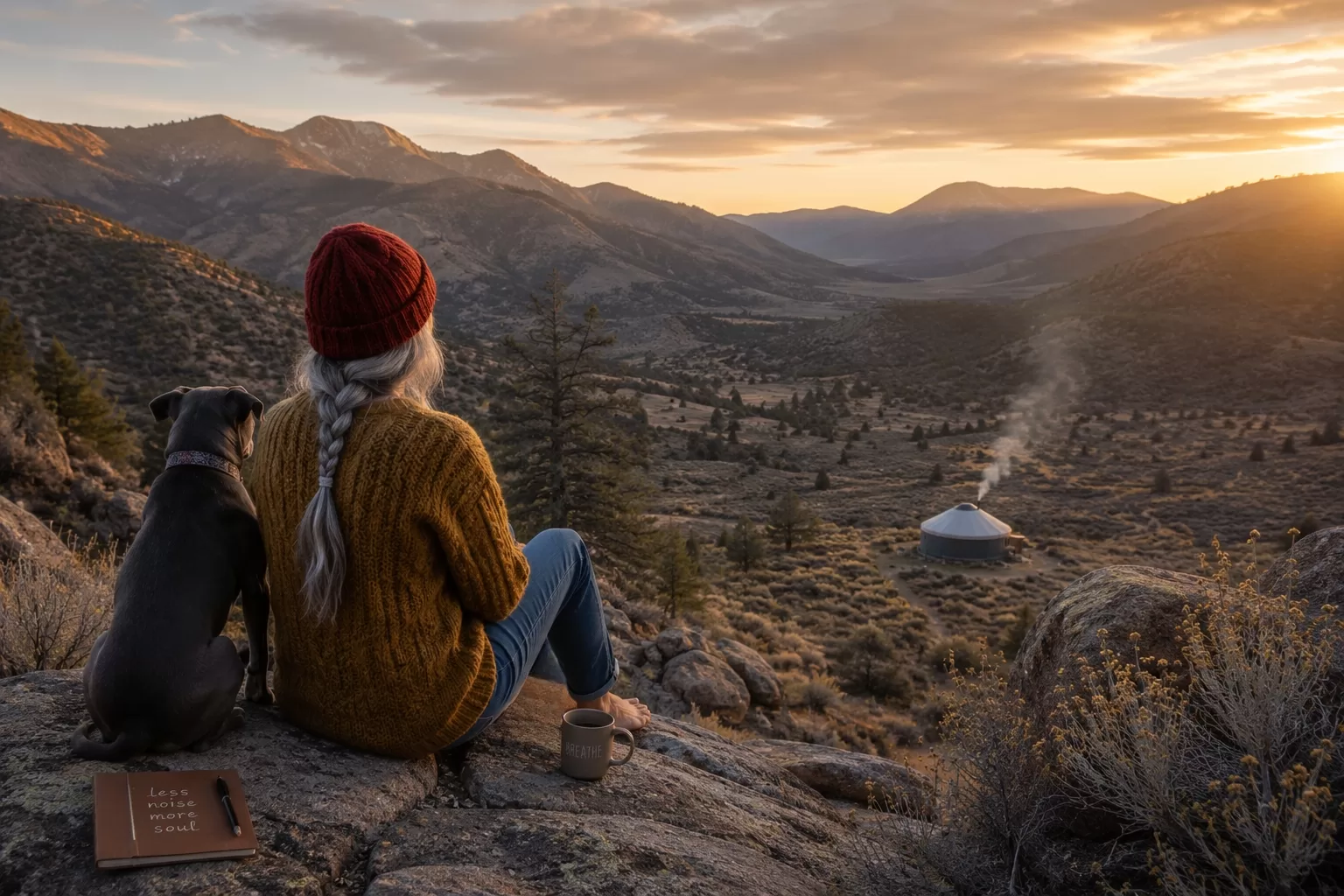
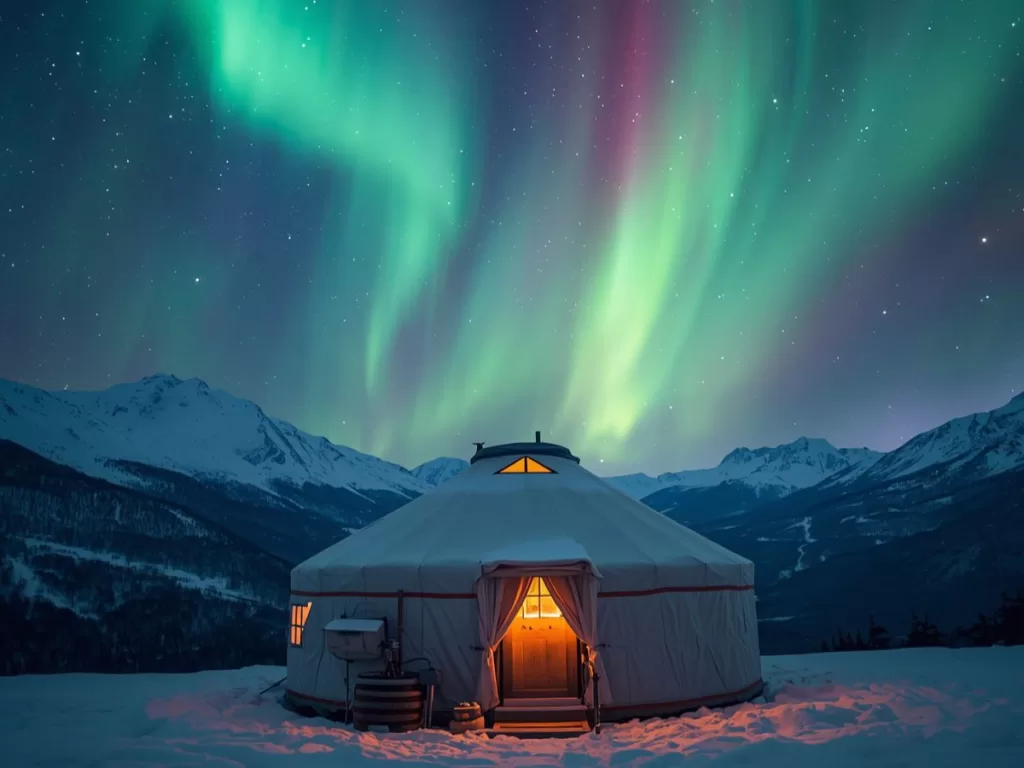
A dear friend offered me an off-grid yurt on her property; I moved in right after a big January snowstorm. My tiny path winding through boulders to my own tiny space.
When I tell people I moved into a 200-square-foot yurt, I can almost feel the assumptions arrive before they speak.
Was I struggling financially?
Was I having a breakdown?
Was I running away from something?
Wasn’t it uncomfortable?
Wasn’t I scared, for god’s sake!?
And the truth is, no; I have not regretted it for a single minute.
But what people rarely understand is that many women are already living in chronic discomfort long before they leave. We simply become conditioned to tolerate it.
We tolerate overstimulation, covert emotional abuse, and control.
We tolerate environments and people who dysregulate us.
We tolerate emotional labor that never ends.
We tolerate noise, tension, criticism, blame, expectations, caretaking, and the constant pressure to hold everything together.
Especially women over 50.
Many of us were raised to believe that being a “good woman” meant enduring. Smiling through exhaustion. Prioritizing everyone else’s comfort over our own. Staying loyal to lives that quietly depleted us.
We learned to mistrust our own discomfort.
We became experts at adapting.
But eventually, the body speaks up.
Mine certainly did.
I began noticing how deeply my nervous system reacted to chaos, clutter, noise, and emotional tension. I realized I had spent years functioning in a low-grade survival state while calling it normal adulthood.
I think highly sensitive women especially understand this, even if they do not always have language for it.
Some of us are simply more porous to the world.
Noise enters us differently.
Conflict lingers longer.
Crowded environments drain us faster.
Emotional undercurrents affect our bodies even when nobody speaks them aloud.
And yet modern life often demands and presents the exact opposite of what sensitive nervous systems need.
More stimulation.
More productivity.
More consumption.
More hustle.
More digital noise.
More emotional labor.
More endurance.
At some point, I realized I did not need a better coping mechanism.
I needed stronger boundaries, more self love, and a different way of living.
So I left.
Not impulsively.
Not recklessly.
But honestly.
The yurt itself was simple. Tiny. Imperfect. Humble.
And somehow, the moment I stepped into it, my nervous system recognized something before my mind did.
Relief.
Deep, immediate relief.
Not because the yurt solved all my problems. It did not. I still had fears, grief, uncertainty, financial concerns, and moments of loneliness.
But for the first time in years, my body stopped bracing itself quite so hard.
The silence mattered.
I do not think people fully understand how healing silence can be until they experience enough of it. Real silence. Not scrolling in a quiet room. Not numbing out with television. I mean actual quiet. Wind in the trees. Rain on canvas. Birds at dawn. The sound of your own breathing returning.
My nervous system softened in that silence.
I began sleeping more deeply.
Thinking more clearly.
Feeling my own emotions instead of constantly managing everyone else’s.
And slowly, almost without noticing, joy began returning.
Not performative joy. Not the curated kind sold online.
Tiny joy.
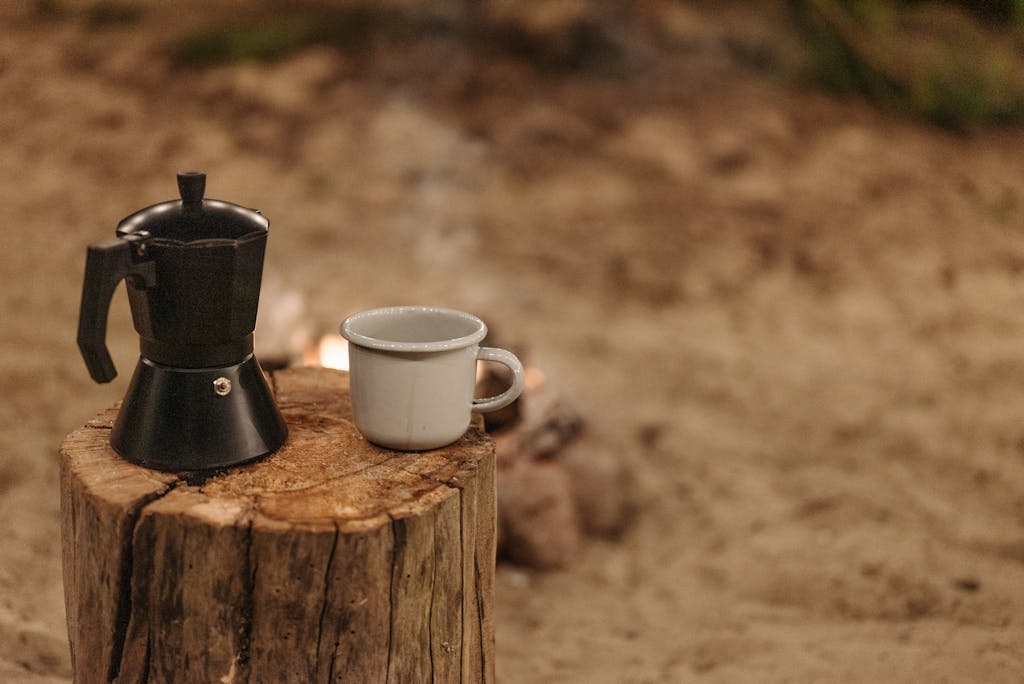
Making coffee in the morning.
Sweeping the little floor.
Watching the weather move across the mountains.
Walking barefoot outside at sunrise.
Reading by candle light.
Listening to coyotes at night.
Feeling connected to my own life again.
The yurt stripped away so much unnecessary noise that I could finally hear myself.
And perhaps that was the real healing.
Not the yurt itself.
Not minimalism.
Not aesthetics.
Truth.
There was no room inside 200 square feet for pretending.
No extra rooms to maintain.
No piles of possessions demanding attention.
No endless distractions keeping me from reality.
Just honesty.
And honesty can feel terrifying at first.
When women begin creating quieter lives, buried emotions often rise to the surface. Grief. Anger. Exhaustion. Loneliness. Realizations about relationships, patterns, or years spent abandoning ourselves to maintain peace.
But I think this is why many women secretly crave simpler lives.
Not because we are lazy.
Not because we are giving up.
Because simplicity reveals what matters.
Modern culture often tells women that success looks bigger. Bigger homes. Bigger schedules. More achievements. More productivity. More appearances to maintain.
But what if healing looks smaller?
What if peace is found not in acquiring more, but in finally needing less?

The yurt taught me that my nervous system does not care very much about status. It cares about safety. Calm. Rhythm. Rest. Nature. Spaciousness. Authenticity.
And once I experienced that kind of regulation, it became impossible to unsee how dysregulated I had been before.
There is a certain grief in realizing how long you lived disconnected from yourself.
But there is also freedom in it.
Because once you stop abandoning yourself, your entire life begins reorganizing around what is actually sustainable.
I think many women are reaching this point right now. Quietly. Secretly.
Women who are tired of performing wellness while slowly unraveling inside. Women who no longer want lives built entirely around obligation. Women craving gardens, silence, tiny homes, long walks, solitude, creative work, community, wilderness, authenticity, and rest.
Women who are beginning to understand that nervous system health is not selfish.
It is foundational.
For me, moving into a yurt became an act of nervous system protection.
A refusal to continue living in ways that kept my body trapped in chronic stress.
And no, it was not always easy.
There were cold nights. Dust storms. Financial fears. Moments of doubt. Times when I wondered if I had completely lost my mind.
But underneath all of that was something I had not felt in decades:
Freedom.
Not the loud, glamorous kind.
The quiet kind.
The kind that arrives when your body finally realizes it no longer has to perform survival every day.
And I want other women to know this:
You are allowed to choose a life that feels better in your body, even if it makes less sense to other people.
You are allowed to disappoint expectations that are slowly destroying your well-being.
You are allowed to create a softer life.
A quieter life.
A smaller life.
A slower life.
You are allowed to leave environments that keep your nervous system in distress. Please read that line again: You are allowed to leave environments that keep your nervous system in distress.
Even if other people call it impractical.
Even if they do not understand.
Even if it scares you.
Especially then.
Because sometimes the brave decision is not climbing higher.
Sometimes it is stepping away entirely.
Stepping away from the noise.
The pressure.
The performance.
The endless expectation that women should absorb discomfort indefinitely.
I did not move into a yurt because I gave up on life.
I moved into a yurt because I wanted a life that felt alive again.
And maybe that is what so many women are searching for right now.
Not perfection.
Not luxury.
Not reinvention.
Just the feeling of finally being able to breathe.
Sometimes healing does not arrive as a breakthrough or a transformation.
Sometimes it arrives quietly: as 200 square feet of canvas, bare feet on a wood floor, morning light through trees, or a nervous system slowly learning that peace and safety are possible again.
If this piece resonates with you, or you have more questions, feel free to email me: hello@thebarefootchica.com. I’d be happy to share more.
Love, X The Barefoot Chica